

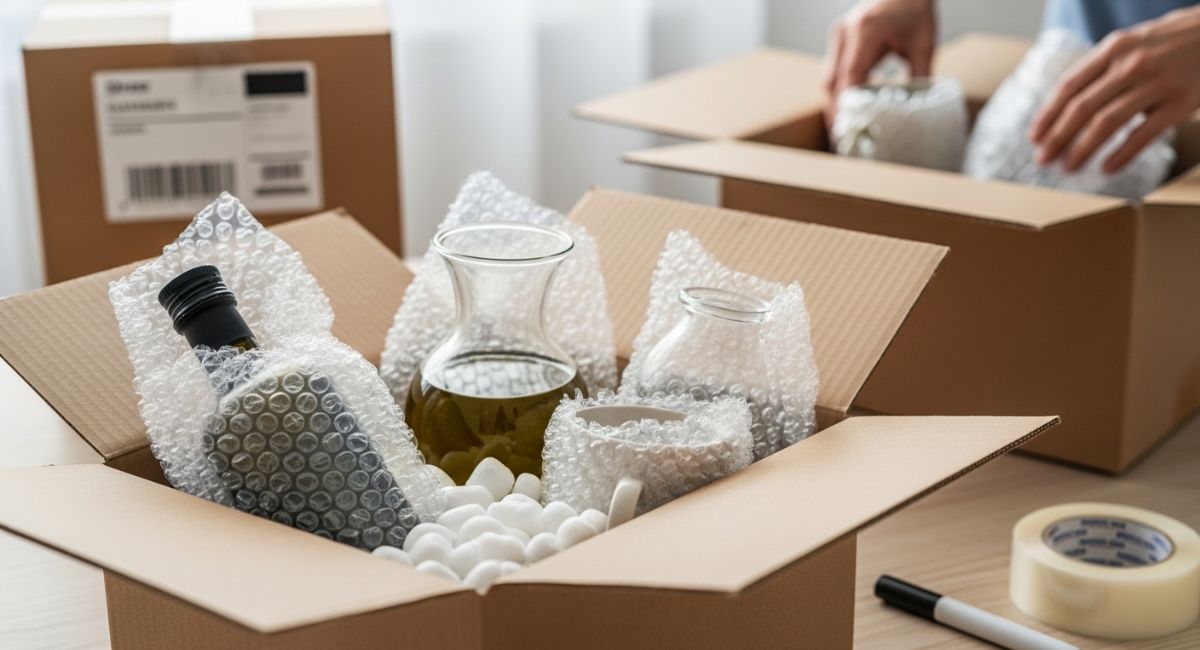
Few things are more frustrating than opening a highly anticipated package, only to find a soggy cardboard box and the distinct smell of spilled liquids. Shipping household liquids is difficult enough. Add a fragile glass container to the mix, and you have a recipe for disaster. Olive oils, vintage wines, perfumes, and specialty cleaning solutions require careful handling to survive the rough journey through the postal system.
When you ship these items, they face a barrage of challenges. Delivery trucks experience constant vibrations, warehouse workers stack heavy boxes on top of each other, and packages endure fluctuating temperatures that can cause liquids to expand. A minor bump is often all it takes to shatter a glass bottle or force a poorly sealed cap to pop open.
Fortunately, you do not have to leave the fate of your delicate items to chance. By utilizing the right packing materials and techniques, you can drastically reduce the risk of leaks and breakages. The following guide covers five highly effective strategies to help you pack and ship your fragile liquid goods safely.
1. Double-Seal All Caps and Lids
The primary defense against leaks starts right at the source. Before you even think about placing a bottle inside a box, you must secure its opening. During transit, changes in air pressure and temperature can cause liquids to expand. This pressure easily pushes loose caps upward, allowing liquid to escape.
To prevent this, remove the cap, place a small piece of plastic wrap over the opening, and screw the cap back on tightly. Next, apply a layer of electrical tape or heavy-duty packing tape completely around the outside edge of the lid. This creates a strong physical barrier that holds the cap firmly in place, even if the bottle gets squeezed or shaken.
2. Utilize Waterproof Bagging
Even with a tightly secured lid, you should always prepare for the worst-case scenario. If a glass bottle breaks, you want to contain the mess entirely. Allowing liquid to seep into the outer cardboard compromises the structural integrity of the entire package, which often leads to the shipping carrier discarding your box altogether.
Place every individual bottle inside its own waterproof, sealable plastic bag. Thick freezer bags work exceptionally well for household items. Squeeze out as much excess air as possible before sealing the bag to reduce pressure build-up. For highly valuable or deeply pigmented liquids like red wine, consider double-bagging the item for an extra layer of security.
3. Apply the Box-in-a-Box Method
When shipping fragile goods, a single layer of cardboard rarely offers enough impact resistance. The box-in-a-box method provides superior shock absorption and keeps delicate glass away from the outer edges of your package.
First, wrap your bagged liquid item in several layers of thick bubble wrap, securing the bundle with tape. Place this wrapped item inside a small cardboard box. Then, select a larger outer box that leaves at least two inches of space on all sides of the inner box. This dual-layer approach acts as a heavy-duty shock absorber, deflecting the direct impacts that happen when packages are tossed or dropped.
4. Eliminate All Void Space
A shifting item is a broken item. If your inner box can move around inside the outer box, the momentum will eventually cause damage. Your goal is to suspend the inner box completely within the center of the outer package.
Fill the bottom of the larger box with packing peanuts, tightly crumpled kraft paper, or foam inserts. Place the smaller box inside, and firmly pack the remaining empty spaces along the sides and top. Press the material down to ensure there are no hidden air pockets. Before taping the main box shut, give it a gentle shake. If you hear or feel any movement, add more packing material until the contents are completely immobilized.
5. Follow Carrier Guidelines and Use Proper Labels
Shipping companies have specific rules regarding liquid transportation. Some carriers restrict flammable liquids, such as certain perfumes or alcohol. Always verify your carrier’s prohibited items list before paying for postage.
Once you confirm your item is safe to ship, label the package clearly. Place large “Fragile” and “Liquid enclosed” stickers on multiple sides of the box. You should also draw prominent upward-facing arrows on the sides to indicate the proper orientation of the box. While automated sorting machines cannot read these labels, human handlers will see them during the final stages of delivery, prompting them to place the box upright.
Learning from Industrial Shipping Standards
You can learn a lot by observing how massive corporations transport bulk liquids safely across the country. Large-scale companies use highly standardized packaging protocols to ensure their chemical products arrive intact. For example, businesses that utilize toll manufacturing services for custom chemical blending rely on meticulous sealing and impact-resistant containment to prevent leaks during cross-country transit. You can apply this same careful, multi-layered methodology to your own household shipments to achieve professional-level reliability.
Securing Your Next Shipment
Packing fragile liquids takes a bit of extra time and effort, but the peace of mind is entirely worth the investment. By double-sealing your containers, utilizing waterproof barriers, and providing plenty of shock absorption, you ensure your liquids arrive exactly as you sent them. Implementing these packing strategies helps protect your valuable items, preserves the shipping materials, and guarantees a dry, intact delivery every time.
People Also Read: The Top Trends Shaping Green Manufacturing

I am Adil! an Passionate Digital Strategist with Expertise in SEO, Content Marketing, and Online Branding.