

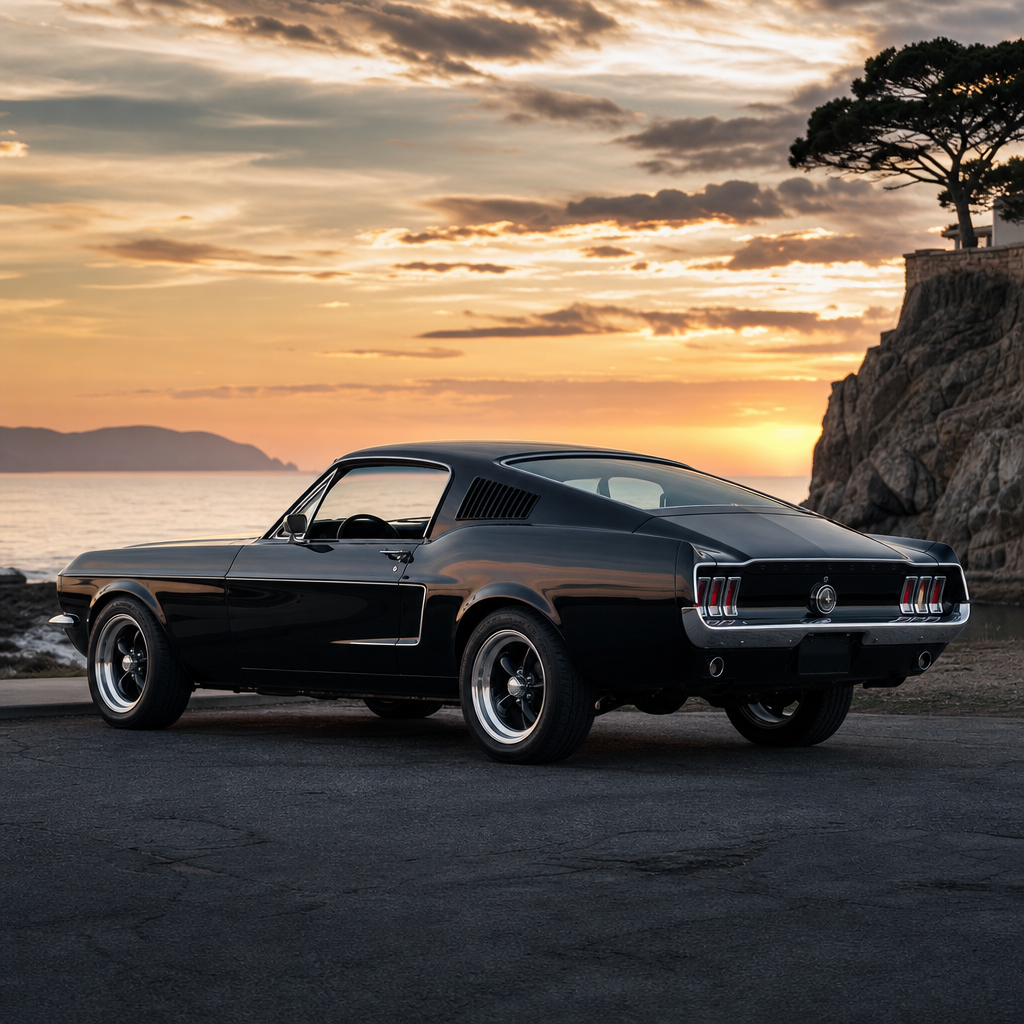
Few vehicles in American automotive history have managed to hold the cultural imagination quite like the 1967 Ford Mustang GT Fastback. More than half a century after it rolled off the assembly line, this car continues to inspire passionate collectors, restorers, and enthusiasts who see it not merely as transportation, but as a living artifact of an era defined by bold design and mechanical ambition. Its silhouette is instantly recognizable, its engine note unmistakable, and its place in the pantheon of American muscle cars is essentially unchallenged. Understanding why this particular model year resonates so deeply requires looking at both what Ford got right in 1967 and what the car has come to represent in the decades since.
The 1967 Redesign: A Turning Point for the Mustang Nameplate
When Ford unveiled the redesigned Mustang for the 1967 model year, the automotive press took notice immediately. The original 1964½ pony car had been a sensation, but by 1967, Ford’s engineers and designers understood that the market was shifting. Competitors like the Chevrolet Camaro and Pontiac Firebird were entering the fray, and the Mustang needed to grow up — both in size and in power. The 1967 model featured a wider body, a more aggressive front fascia, and a reshaped fastback roofline that gave the car a distinctly predatory stance. It was no longer just a sporty compact; it was a genuine performance machine.
The GT package elevated the experience further. Buyers who opted for the GT trim received a 390 cubic inch FE V8 engine producing 320 horsepower, along with GT fog lamps, a special exhaust system, and distinctive striping. These weren’t cosmetic flourishes — they were functional upgrades that transformed the Mustang into a credible track and street performer. The combination of visual drama and mechanical substance is precisely what has kept this model year at the top of collector wish lists for generations.
Engineering Choices That Defined a Generation
What made the 1967 GT Fastback particularly compelling from an engineering standpoint was Ford’s willingness to push boundaries without abandoning drivability. The suspension tuning struck a balance between road-holding capability and the kind of compliant ride that made the car usable on a daily basis. The front disc brake option — still relatively uncommon in American muscle cars at the time — gave drivers a meaningful safety advantage. These decisions reflected a philosophy that performance and practicality were not mutually exclusive, a lesson that continues to influence sports car development today.
It is worth noting that the engineering ambition of the Mustang lineage has never really faded. Modern iterations of the Mustang have taken that original spirit to extraordinary extremes. For a fascinating look at how far Ford has pushed the envelope in recent years, the engineering behind the 815-horsepower Mustang GTD offers a remarkable window into what happens when a manufacturer commits fully to performance without compromise.
Cultural Resonance: Hollywood, Racing, and the Road
The 1967 Mustang’s cultural footprint extends well beyond the showroom floor. Its appearance in films, television programs, and racing circuits throughout the late 1960s and into the 1970s cemented its status as an icon. The fastback body style in particular became synonymous with a certain kind of American freedom — the open road, the roar of a big-block engine, the sense that anything was possible if you had the right machine beneath you. This imagery was carefully cultivated by Ford’s marketing department, but it resonated because it reflected something genuine about the car’s character.
Hollywood’s relationship with muscle cars, however, has not always been accurate. Many films have perpetuated myths about how these vehicles actually perform in high-stress situations. If you’ve ever wondered how realistic those dramatic chase sequences really are, it’s worth reading about the car accident myths that movies keep getting wrong — a sobering reminder that cinematic spectacle and mechanical reality are rarely the same thing.
The Collector Market: Why Values Keep Climbing
From a financial perspective, the 1967 Mustang GT Fastback has proven to be one of the more resilient investments in the classic car market. Auction results over the past decade have consistently shown strong demand for well-preserved or professionally restored examples, with prices for matching-numbers GT models regularly exceeding six figures. Several factors drive this sustained appreciation. First, the supply of original, unmodified examples continues to shrink as cars are lost to accidents, neglect, or poorly executed restorations. Second, the demographic of buyers has expanded — younger collectors who grew up seeing these cars in films and video games are now entering the market with serious purchasing power. Third, the quality of restoration work available today means that even a heavily worn example can be brought back to concours condition, making the barrier to entry more accessible than it once was.
Revology Cars: Honoring the Legacy with Modern Precision
Not every enthusiast wants to navigate the complexities of sourcing original parts or managing the mechanical idiosyncrasies that come with a fifty-year-old vehicle. That is where companies like Revology Cars have carved out a distinctive and respected niche. Revology builds continuation vehicles — new cars constructed to the exact specifications of the original 1960s Mustangs, but with modern drivetrains, updated safety systems, and contemporary build quality. The result is a car that looks and feels authentically period-correct while offering the reliability and performance that modern drivers expect. For classic Mustang fans, Revology represents an opportunity to experience the 1967 GT Fastback without the compromises that typically accompany vintage ownership.
The company’s approach is meticulous. Every panel, every trim piece, and every mechanical component is evaluated against the original factory specifications. The attention to detail extends to the interior, where period-correct materials are used alongside modern amenities that make the driving experience genuinely enjoyable rather than merely nostalgic. Revology has earned a reputation among serious collectors and enthusiasts as a builder that understands what makes these cars special and refuses to cut corners in the pursuit of authenticity.
What Sets the 1967 Model Apart from Other Mustang Years
Mustang enthusiasts are a discerning group, and debates about which model year represents the pinnacle of the nameplate are a staple of car shows and online forums alike. The 1967 GT Fastback tends to emerge as a consensus favorite for several reasons. It was the last year before the Mustang began its gradual drift toward heavier, more bloated proportions that characterized the early 1970s models. It offered the widest range of engine options of any Mustang to that point, including the legendary 428 Cobra Jet that arrived mid-year. And its styling, while clearly an evolution of the original 1964 design, achieved a level of visual cohesion and aggression that subsequent redesigns struggled to match.
Conclusion: A Car That Earns Its Legendary Status
The enduring appeal of the 1967 Ford Mustang GT Fastback is not the product of nostalgia alone. It is the result of a vehicle that genuinely delivered on its promises when new and has continued to reward those who engage with it seriously. Whether you are a collector seeking an investment-grade original, an enthusiast looking for a driver-quality example, or someone exploring the continuation vehicle market, the 1967 GT Fastback offers something that very few automobiles can claim: a combination of beauty, performance, and historical significance that only deepens with time. In a market crowded with options, this remains a car that earns its legendary status every single time it turns a wheel.
