

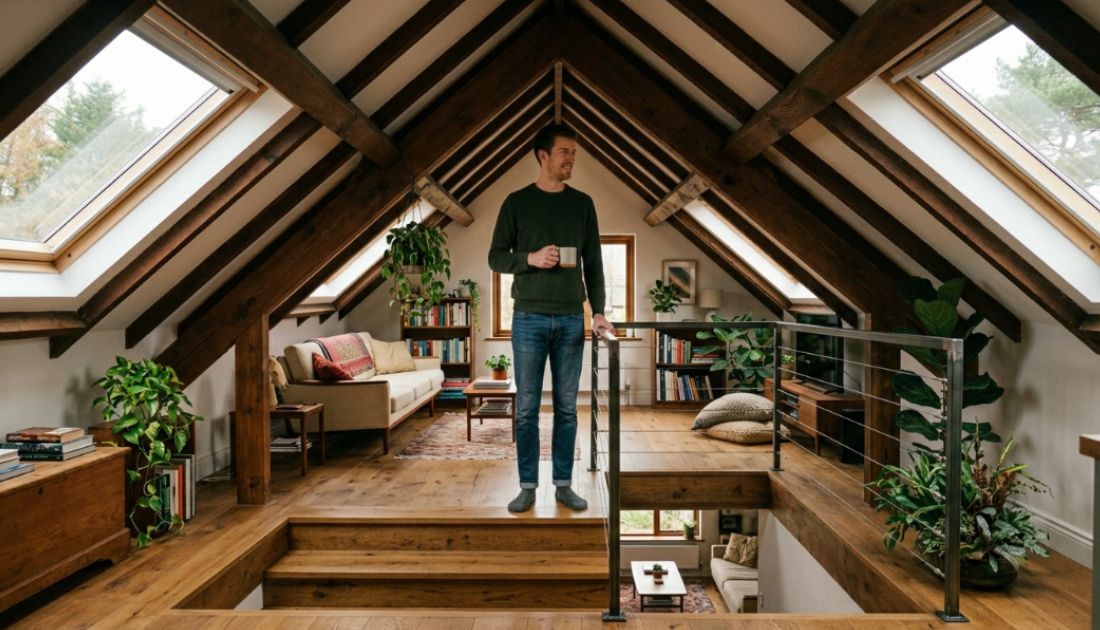
The surveyor measured my loft and gave me bad news. Not enough headroom for a proper conversion. I thought that was the end of it. Then the architect looked at the problem from a completely different angle and solved it, not in the loft at all, but in the room below. The loft conversions I had assumed were impossible suddenly became possible, just not the way I expected.
I had been measuring the loft itself, top to bottom, and the number fell short of what regulations need for a usable room. In my head, that was a flat no. Too short is too short. You cant magic up height that isn’t there.
The architect didn’t accept that. She understood that headroom is the distance between two surfaces, and if you can’t raise the top, you can sometimes lower the bottom. The answer to my loft problem was sitting one floor down, in the ceiling of the room beneath.
Why Headroom Decides a Loft
Building regulations need a minimum height for a habitable room and for the stairs leading to it. If the loft falls short, you can’t legally or comfortably use it as a bedroom.
Most people, me included, measure the existing loft and take the number as fixed. Too low means no conversion. That is the assumption that stops a lot of projects before they start.
But headroom is a gap between the floor of the loft and the ridge of the roof. There are more ways to change that gap than just raising the roof, which is expensive and needs permission. The architect knew the alternatives.
The Solution I Never Considered
Her idea was to lower the ceiling of the room directly below the loft. By dropping that ceiling slightly, the loft floor could sit lower, which increased the headroom above it without touching the roof at all.
The room below lost a few centimetres of ceiling height, barely noticeable, and still well within comfortable limits. In exchange, the loft gained the headroom it needed to become a proper room.
It was the kind of three dimensional thinking I could never have done myself. I saw two separate floors. She saw one connected structure where height could be borrowed from one level to serve another.
Why the Room Below Held the Answer
The key insight was that the loft and the room beneath share a boundary, the floor of one is the ceiling of the other. Move that shared surface down, and you change the height in both rooms at once.
The room below had generous ceiling height to start with, more than it needed. So lowering it slightly cost almost nothing in comfort there, while unlocking the loft above.
This is why a loft can’t be looked at in isolation. It is part of a whole house, and sometimes the solution to a loft problem lives in an entirely different room. The architect read the house as a connected whole, not a stack of separate boxes.
How This Changed the Whole Project
With the headroom problem solved, the loft conversion was back on. The room that had been ruled out became a proper bedroom with an ensuite, all because of a clever move in the floor below.
The work in the lower room was minor and quick. A modest drop in the ceiling, redecorated afterward, hardly disruptive. The payoff was an entire extra floor of usable space.
What had felt like an impossible project became a straightforward one, once someone looked at it the right way. The no from the surveyor became a yes from the architect, simply by changing where the problem was solved.
Why Experience Spots These Solutions
An architect who does lofts regularly has met the headroom problem many times. They know the workarounds, lowering ceilings, adjusting the floor build up, repositioning to where the roof is tallest.
A less experienced eye sees the short measurement and gives up. An experienced one sees the options and finds the way through. That difference is exactly what you are paying for.
The firm I used had solved this on plenty of London homes before. A skilled london architect practice treats a headroom shortfall as a puzzle to work through, not a dead end. That knowledge saved my project.
What to Do If Your Loft Seems Too Short
Don’t take a low headroom measurement as a final no. There are often ways to find the height you need, and they don’t always involve the loft itself.
Get an experienced loft architect to look before you give up. Lowering a ceiling below, adjusting the floor, or repositioning the room can unlock space a simple measurement says isn’t there.
Five to seven months from that disappointing survey to a finished loft I was told couldn’t be done. The headroom problem looked fatal. The architect solved it in the room below. Sometimes the answer to a loft is not in the loft at all.
People Also Read: The Essential AI Productivity and Security Ecosystem: How Leading Tools Work Together

I am Adil! an Passionate Digital Strategist with Expertise in SEO, Content Marketing, and Online Branding.