

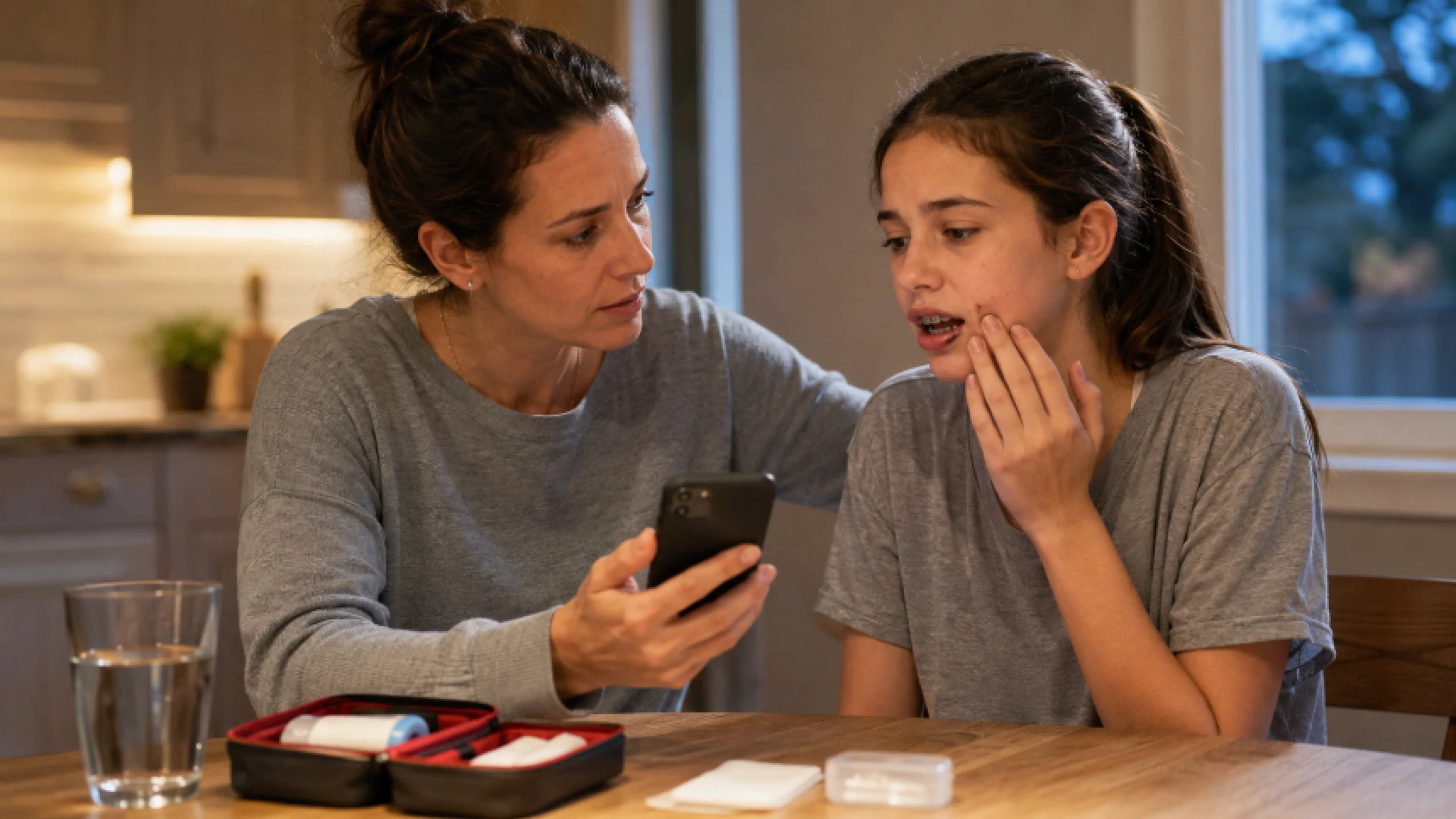
A wire poking the cheek at 9 p.m. A bracket that popped off during dinner. A child crying because the pain from a new adjustment won’t let them sleep. Families dealing with braces or aligners face these moments constantly, and most people have no idea which situations need care tonight and which can wait until Monday. That uncertainty sends thousands of people to hospital emergency rooms every year for problems an ER simply cannot treat. Emergency physicians have no brackets, no wires, no orthodontic tools. The visit ends with a bill, maybe a painkiller, and instructions to see a specialist anyway.
Knowing where to turn matters as much as knowing when. Most orthodontic practices reserve same-day slots for urgent problems, and many keep an after-hours line for guidance. Searching for an emergency orthodontist before trouble strikes, and saving that number in your phone, spares a family the midnight scramble and often avoids an unnecessary ER trip entirely. Preparation costs nothing. Panic costs sleep, money, and sometimes a preventable complication.
True emergencies: act immediately
Genuine orthodontic emergencies are rare, and that’s worth saying plainly. Research on orthodontic urgent care puts serious cases at a small fraction of all appointments. Three situations demand immediate attention, day or night.
Trauma to the face or mouth comes first. A fall, a sports collision, a car accident. If a tooth gets knocked loose or out, if the jaw may be fractured, or if bleeding won’t stop after ten minutes of firm pressure, go to urgent care or the ER first. Medical staff handle the injury; the orthodontist repairs appliance damage afterward.
Swallowed or inhaled appliance pieces come second. A swallowed bracket usually passes without harm, but anything inhaled into the airway causes coughing, wheezing, or trouble breathing and needs a hospital right away.
Severe infection rounds out the list. Facial swelling, fever, and throbbing pain that spreads toward the eye or neck point to an abscess. Infections in this area can escalate fast, so same-day medical evaluation is the safe call.
Urgent, yet manageable until morning
The vast majority of “braces emergencies” fall into a middle category: uncomfortable, sometimes scary, and almost always safe to manage at home for a night with a call to the orthodontist the next business day.
- Poking wire irritating the cheek or gum
- Loose or detached bracket
- Lost ligature or rubber band
- Soreness after an adjustment
- Cracked retainer or aligner
- Lost separator between teeth
- Mild mouth sores from appliance friction
Orthodontic wax solves half of these problems temporarily. A pea-sized piece pressed over a sharp edge protects soft tissue for hours. No wax at hand? Sugar-free chewing gum works in a pinch. A wire that shifted badly can be nudged back with a pencil eraser or clipped behind the last tooth with clean nail clippers, then covered. Salt water rinses calm irritated tissue, and over-the-counter pain relief handles adjustment soreness.
Quick reference: what to do and when
| Situation | Urgency level | First step |
| Facial trauma, knocked-out tooth, possible jaw fracture | Immediate | ER or urgent care now, orthodontist after |
| Inhaled appliance piece, breathing trouble | Immediate | Hospital emergency department |
| Swelling with fever, spreading pain | Same day | Call orthodontist or physician immediately |
| Poking wire, loose bracket | Next business day | Cover with wax, call for a repair visit |
| Cracked or lost retainer | Within a few days | Call for a replacement before teeth shift |
| Soreness after adjustment | Home care | Soft foods, salt rinses, OTC pain relief |
Print this or screenshot it. Families under stress make better decisions with a simple reference in hand, and school nurses, coaches, and caregivers appreciate having one too.
Why ER visits for dental pain keep rising
The American Dental Association has tracked emergency department use for dental conditions for years, and the numbers tell a story about access. More than two million ER visits annually involve dental complaints, at an average cost several times higher than an office visit. Hospitals treat pain and infection, then refer the patient out, because definitive dental or orthodontic treatment requires equipment and training emergency departments don’t carry.
Access gaps drive much of this pattern. Families without an established provider, those in rural counties, and those relying on public coverage end up in the ER because it never turns anyone away. Community health programs and referral networks work to close that gap by connecting people with providers before a crisis hits. The lesson for any household with a child in braces echoes that mission on a small scale: establish the relationship early, keep contact information current, and ask your provider how they handle after-hours calls before you ever need one.
Preventing the preventable
A large share of urgent visits trace back to a handful of avoidable causes. Hard and sticky foods break brackets more than anything else; popcorn kernels, ice chewing, and caramel top the offender list. Mouthguards prevent most sports-related appliance damage, and custom versions fit over braces comfortably. Retainer cases prevent the classic crushed-in-a-backpack scenario that leaves a teenager without protection while teeth quietly drift.
Skipped appointments create slower-motion problems. A loose band left unattended for weeks can trap plaque and start decay under the appliance. Small issues caught at regular visits stay small.
Questions worth asking your provider now
Every family managing orthodontic treatment should know four things about their practice. How are after-hours calls handled, and is there a nurse line or answering service? Does the office reserve same-day slots for urgent repairs? What does an emergency visit cost, and does insurance apply? Which nearby urgent care or hospital does the practice recommend for true trauma?
Ten minutes of asking during a routine visit turns a future crisis into a manageable inconvenience. The families who navigate urgent situations calmly are rarely the luckiest ones. They’re the ones who asked early, saved the number, and knew the difference between a problem that needs a hospital and a problem that needs a piece of wax and a good night’s sleep.
