

For decades, the phrase “root canal” has mistakenly served as a universal punchline for dental discomfort. However, a quiet revolution has taken place inside modern clinics across the country. Driven by innovations in engineering, imaging, and materials science, endodontic therapy—the branch of dentistry focused on treating the inside of the tooth—has shifted dramatically. Today, the procedure is no longer something to fear. Advanced root canal technology is delivering better outcomes with less stress, fundamentally rewriting the script for both dentists and their patients.
Digital Diagnostics and 3D Imaging
The absolute foundation of any successful dental procedure is a crystal-clear diagnosis. Traditional flat, two-dimensional X-rays often leave clinicians guessing about the exact, complex anatomy of a tooth’s root system. Enter Cone Beam Computed Tomography (CBCT), a true game-changer in diagnostic imaging.
Unlike older imaging methods, a CBCT scan takes only seconds and generates a highly detailed, three-dimensional digital model of the tooth, jawbone, and surrounding nerves. By eliminating surprises mid-procedure, this advanced imaging plays a critical role of modern dental technology in successful root canal treatment outcomes. This allows dentists to map out micro-structures, detect hidden canals, and identify the precise extent of an infection before treatment even begins.
Precision Cleaning via Rotary Endodontics
Once an infection is mapped, the next hurdle is thoroughly cleaning the microscopic, curved channels inside the root. Historically, dentists relied on rigid stainless steel hand files to manually scrape away damaged tissue. This was a slow, physically demanding process that occasionally risked damaging the natural structure of the root canal or causing structural micro-fractures.
Modern endodontics utilizes rotary and reciprocating systems made from nickel-titanium (NiTi). This unique alloy possesses incredible flexibility and “shape memory,” allowing the automated files to bend smoothly around sharp curves inside the root without breaking. Driven by quiet, computer-controlled electric motors, these rotary tools clean the canals faster, more predictably, and with far greater precision than manual filing ever could.
Advanced Disinfection with Lasers and Sound Waves
Cleaning the main channels is only half the battle; bacteria can still hide inside microscopic side-channels called dentinal tubules. To tackle these hidden threats, dental professionals now use advanced irrigation techniques that go far beyond traditional chemical rinses.
- Laser-Assisted Endodontics: Specialized dental lasers emit targeted light energy into the canals, instantly vaporizing bacteria and organic debris in hard-to-reach pockets.
- Acoustic and Sonic Activation: Systems utilizing fluid dynamics use gentle sound waves to agitate disinfecting solutions inside the tooth. This creates a powerful scrubbing action that flushes out bacteria from the most complex anatomical nooks and crannies.
By achieving a superior level of sterilization, these technologies significantly reduce the risk of secondary infections, meaning patients are much less likely to need retreatment down the track.
The Power of Enhanced Vision
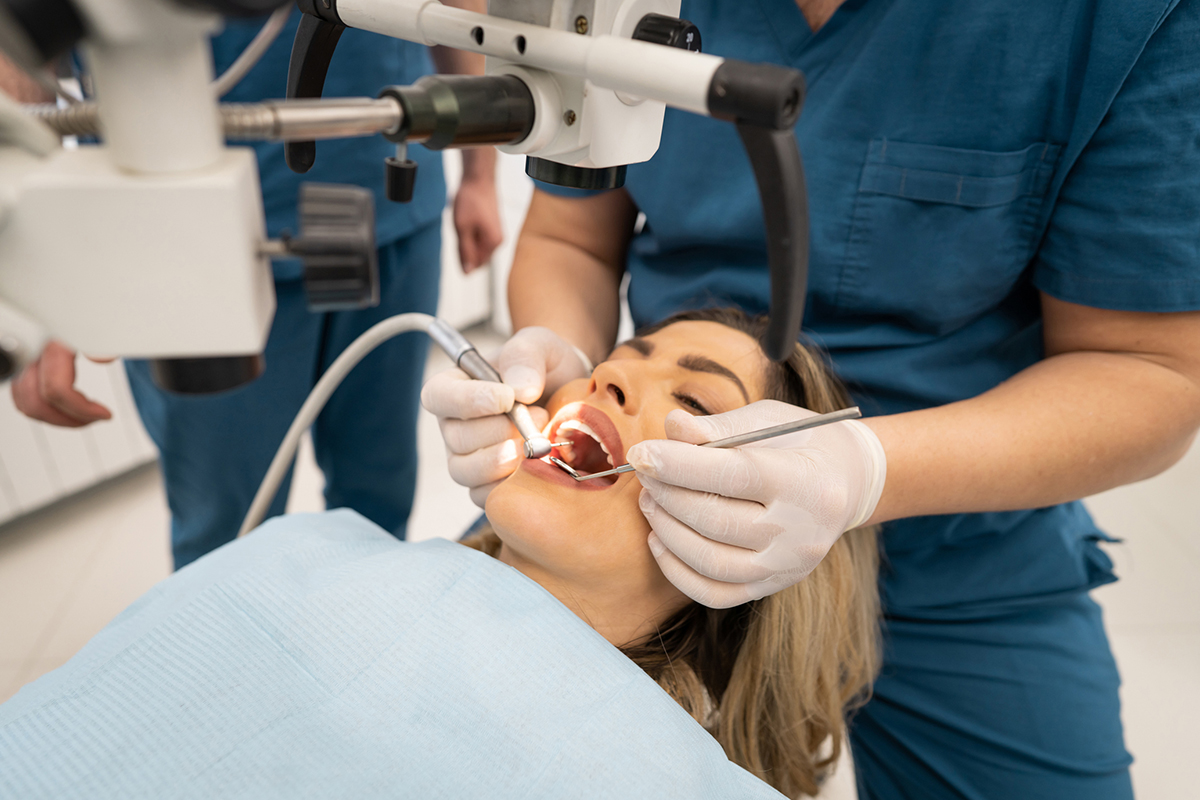
It is difficult to treat what you cannot see, and the human eye can only do so much. The integration of high-powered dental operating microscopes has changed how clinicians operate. These specialized microscopes illuminate the treatment area and magnify it up to twenty-five times its actual size.
With this level of visualization, an endodontist can easily spot hairline fractures, locate blocked canals, and preserve as much of the healthy, natural tooth structure as possible. Minimal intervention means the treated tooth remains structurally stronger and performs better under the everyday pressures of chewing.
Biocompatible Sealing Materials
After a canal is thoroughly cleaned and disinfected, it must be sealed completely to prevent future bacterial invasion. For a long time, standard materials worked well but didn’t always bond perfectly with the damp, organic environment inside a tooth.
Today’s clinics frequently use advanced bioceramic sealers and fillers. These cutting-edge materials are completely biocompatible and chemically active. When placed inside the root, they actually bond with the natural dentine, forming a virtually impenetrable, airtight seal. Furthermore, bioceramics are non-toxic and release calcium silicate, which actively encourages the surrounding bone and tissue to heal faster.
A New Era for the Patient Experience
The cumulative effect of these technological leaps extends far beyond clinical success rates. For the person sitting in the dental chair, the environment has changed completely.
Procedures that once required three or four long, stressful appointments are now routinely completed in a single, highly efficient visit. The elimination of loud, vibrating manual tools in favour of quiet, automated systems significantly reduces procedure-related anxiety. Coupled with highly targeted, computer-assisted local anaesthesia delivery, the entire process is generally no more uncomfortable than receiving a standard filling. It is clear that this wave of modern technology is changing the patient experience, turning a historically dreaded appointment into a streamlined, stress-free path to saving a smile.
