

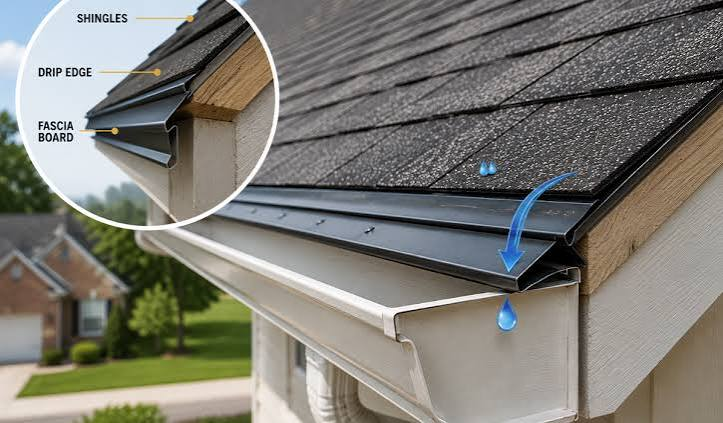
When homeowners think about a new roof, they usually focus on shingles. However, one of the most important components of a roofing system is something many people never notice—the drip edge. This simple piece of metal plays a major role in protecting the roof, fascia, decking, and foundation from water damage.
A drip edge is installed along the edges of the roof to direct rainwater away from the fascia boards and into the gutters. Without it, water can run behind the gutters, causing wood rot, mold growth, peeling paint, and damage to the roof decking. Over time, these problems can lead to expensive repairs that could have been prevented with proper installation.
Drip edge is especially important in areas that experience harsh weather. Heavy rain, snow, ice, and strong winds can force water beneath shingles if the roof edge is not properly protected. A correctly installed drip edge helps prevent wind-driven rain from reaching the roof deck while providing additional support for the first row of shingles.
During the winter months, drip edge also helps reduce the impact of ice dams. As snow melts and refreezes along the roof edge, properly installed drip edge helps direct water toward the gutters instead of allowing it to seep behind the fascia or beneath the roofing materials. While it does not eliminate ice dams, it provides another layer of defense against moisture intrusion.
Modern building codes require drip edge on most asphalt shingle roofing systems because of the protection it provides. When combined with quality underlayment, ice and water barriers, flashing, and proper ventilation, drip edge becomes an essential part of a complete roofing system designed to maximize durability and weather resistance.
During a roof replacement, experienced roofing contractors inspect the existing drip edge to determine whether it should be replaced. Installing new shingles over damaged or improperly installed drip edge can reduce the effectiveness of the entire roofing system. Replacing it during a roof installation helps ensure every component works together to protect the home.
Although it may seem like a small detail, drip edge has a significant impact on the lifespan of a roof. Proper installation helps reduce water damage, protects structural components, improves drainage, and supports the overall performance of the roofing system for many years.
If you’re planning a roof replacement or want to learn more about the components that make up a quality roofing system, visit https://skroofingandconstruction.com/ for additional information about professional roofing services and installation best practices.
