

Introduction
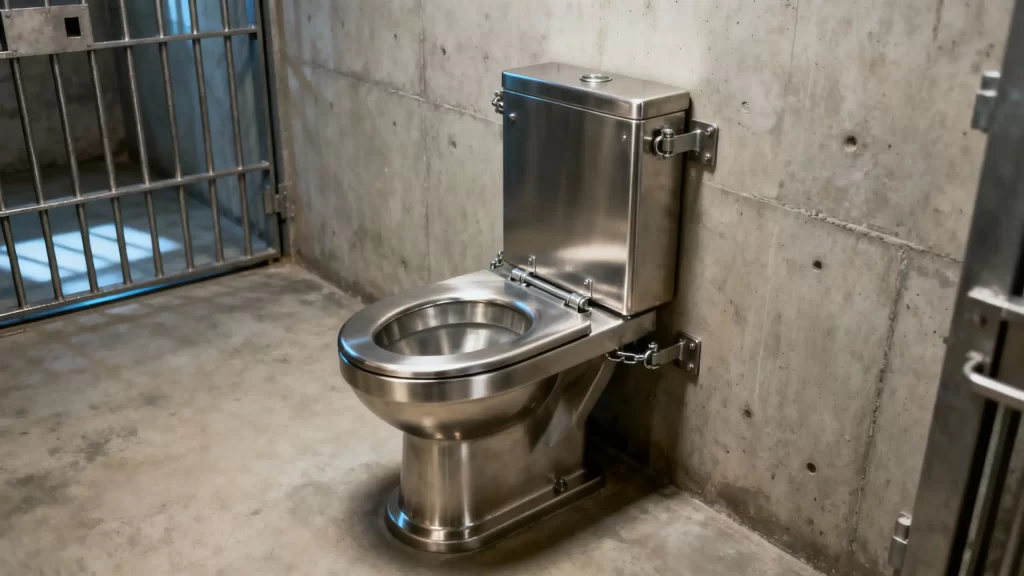
Instead of just being based on the capacity to hold inmates, correctional facilities are now rated based on their ability to provide for the physical and mental needs of inmates. They are increasingly judged in 2026 on their effectiveness in preventing unnecessary injuries, self-harm incidents, and deaths when in custody. The cases of inmate suicides are on the increase in various parts of the world, and this puts pressure on prison administrators, architects, and procurement officers to demonstrate that every element within a detention cell has been designed with inmate safety as a foundational priority rather than an afterthought.
One of the most under the microscope is the prison sanitary system. A traditional jail toilet, along with sinks, exposed pipes, and mounting hardware, has historically provided opportunities to attach or conceal contraband. These fixtures, originally designed for durability rather than safety, were not conceived with the prevention of self-harm as a primary objective. This reality has driven the emergence of the “Zero-Anchor” approach to inmate protection, an engineering strategy that addresses potential attachment points at the design stage rather than relying on supervision alone to catch risks after they materialize.
Understanding the Zero Anchor Design Philosophy
The Zero-Anchor theory is simple: when there is no place to attach a tie-up, opportunities to self-harm are greatly diminished. Rather than trying to control risks after installation, modern detention equipment is engineered to prevent risks from occurring in the first place.
As correctional facilities add environmental suicide risk improvement strategies to mental health monitoring programs, this philosophy is gaining greater value. Any small, exposed plumbing connection or even an accessible gap can become a focus during legal investigations after critical incidents.
Detention equipment can substantially reduce the potential for misuse by providing a unified, safer enclosure, consolidating multiple functions into a single piece of equipment, and supporting streamlined cleaning and maintenance routines that leave fewer opportunities for contraband to be hidden or for fixtures to degrade into hazardous conditions over time.
Incorporating Seamless Integrated Design: Legal Risk Reduction Strategy
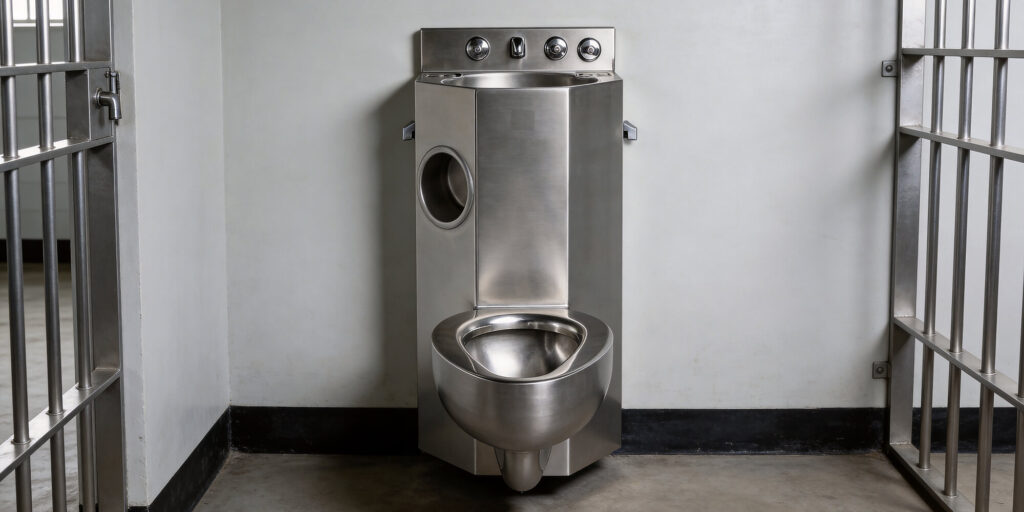
The XinHe PQ433 is a welded stainless steel toilet and handwashing basin engineered for vandal resistance. Its integrated arrangement creates smooth transitions between surfaces and minimizes anchor points, in contrast to installing separate fixtures with exposed plumbing that introduces multiple attachment opportunities and requires more complex maintenance access.
Rounded contours replace corners where attachment might be possible, and these appear throughout the unit. The seamless welded construction reduces joints and gaps, producing a continuous hygienic surface that is easier to sanitize and inspect during routine checks. This profile forms a secure enclosure that helps prevent tampering and excludes unauthorized access to internal systems, which is particularly important in high-risk housing units where the margin for error is narrow and the consequences of oversight are severe.
Evolving Mental Health Requirements in Prisons
There has been a recent evolution in correctional health care that has focused on embedding mental health needs into physical facilities. Prevention strategies are no longer limited to observation protocols and clinical intervention, but now also involve architecture and product design.
Housing groups that cater to susceptible groups are expected to do everything possible to reduce environmental hazards. This includes selecting fixtures that will help to reduce the chances of impulsive behaviour and yet are usable in the normal course of everyday activities. These are achieved by the anti-ligature profile, hidden parts, and strong construction of stainless steel of the XinHe PQ433. Built from heavy-gauge 304 or optional 316 stainless steel and reinforced with structural supports, the fixture resists deformation over years of service, preventing the gradual formation of mechanical attachment points that might otherwise develop as materials age and wear under constant use.
Rounded Contours Restrict Legal Exposure
In cases of trial after a custodial death, one of the questions that may be asked is whether the geometry of the fixture played a role in the incident. Items with exposed brackets, sharp corners, protruding fasteners, or visible plumbing can become central pieces of evidence, and their presence in a cell can be difficult to defend after the fact. For a jail toilet, this means that every surface, edge, and transition must be evaluated not only for hygiene and usability but also for its potential role in a critical incident.
The integrated sink design removes the need for separate hardware between fixtures, reducing the number of components within the cell and simplifying the inventory of items that might be scrutinized in court.
Carefully engineered rounded surfaces eliminate unwanted projections while preserving ergonomic usability for daily hygiene, ensuring that safety measures do not come at the expense of basic dignity and functionality.
The Safety of Officers: Access Maintenance
The activities associated with correctional facilities maintenance pose security concerns within correctional facilities. The maintenance and repair of traditional cells typically involves an officer or staff member entering a cell while it is occupied, which poses an unnecessary risk to the safety of the officer and maintenance staff.
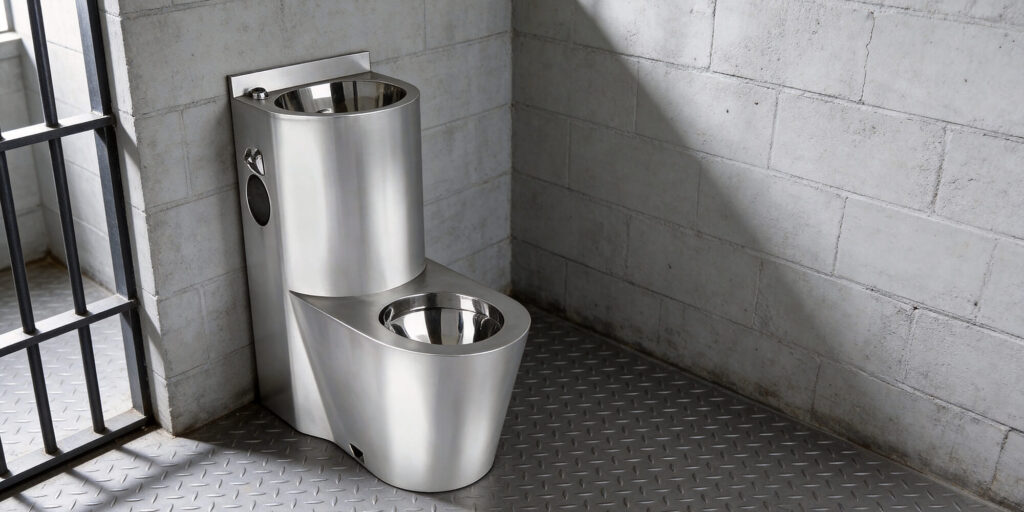
The front maintenance access panel designed on the XinHe PQ433 allows for maintenance of critical components without extensive fixture dismantling. Maintenance operations can be scheduled to minimize direct inmate interaction and impact on operations, depending on facility configuration.
This design approach supports staff safety and institutional efficiency by enabling plumbing checks, valve replacements, and routine maintenance through controlled access points, reducing the need for additional personnel and elaborate security procedures during cell entry.
Maintaining institutional infrastructure requires a broad view of facility operations, from specialty safety fixtures to the foundational climate control and ventilation setups that keep large buildings running. Facility administrators can Learn more about managing complex building systems and maximizing overall indoor comfort by evaluating specialized design choices. Integrating these strategies helps reduce long-term maintenance needs and protects the physical integrity of the entire environment.
Heavy-Duty Construction: Long-Term Compliance
Damage from repeated impacts may lead to unwanted edges, gaps, or exposure of internal mechanisms that reduce safety goals.
The PQ433 is designed for institutional use over many years, with heavy-duty stainless steel construction, polished interior surfaces, and brushed exterior finishes. Corrosion, impact, moisture, and vandalism resistance help maintain its anti-ligature properties over the life of the product.
As long as the structure remains intact under stressful situations, correctional administrators can show ongoing adherence to the safety standards of the facility, while reducing maintenance frequency and replacement costs over the long term.
Certification and Buying Confidence
Buyers at institutions are increasingly looking for independent verification of certifications, especially when it comes to choosing detention equipment. Certification against recognized standards provides assurance that the manufacturing process meets regulatory requirements and that products will perform as specified under real-world conditions.
The PQ433 carries CE certification, confirming its compliance with relevant European health, safety, and environmental protection requirements. Beyond this formal certification, the material inspections and documented manufacturing controls add further confidence for government procurement teams responsible for assessing risk-sensitive infrastructure, where the consequences of a poor purchasing decision can extend far beyond the initial cost of the fixture to encompass legal exposure, regulatory penalties, and the human cost of preventable incidents.
Conclusion
Future correctional infrastructure goes beyond the physical to inclusive risk management. Product selection is becoming more of a strategic choice as every fixture that is installed in a detention cell adds to the safety or vulnerability.
As the Zero-Anchor philosophy of the XinHe PQ433 exemplifies, judicious engineering can minimize avenues for self-harm, ease maintenance, safeguard correctional staff, and strengthen institutional defense in the face of legal challenges.
Anti-ligature sanitary fixtures will continue to be a crucial element of good design, helping correctional facilities to make them safer places while also minimizing long-term risk and liability for the institution and the people it serves.
